

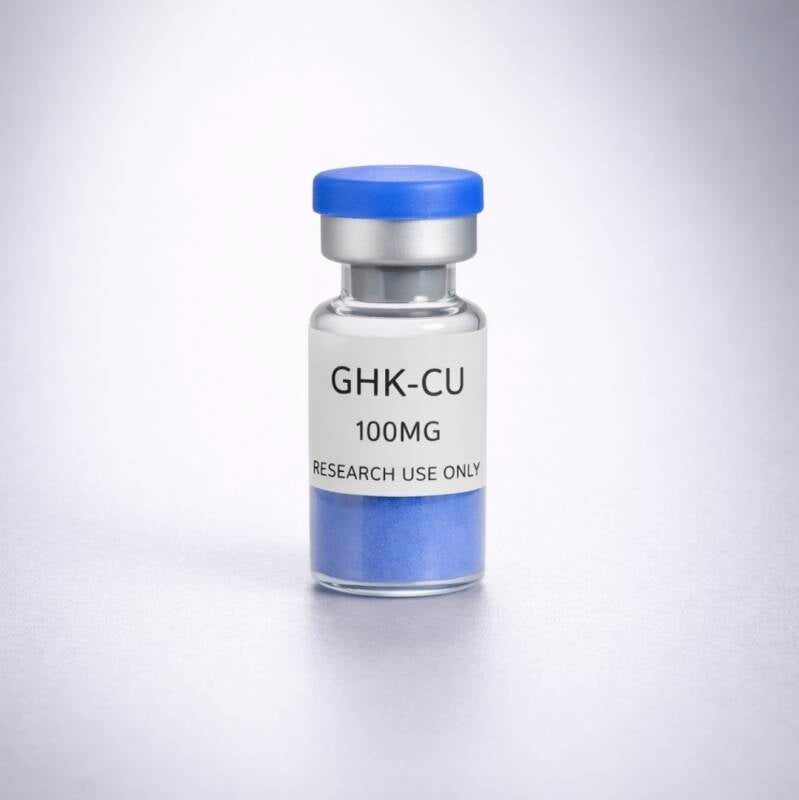
GHK-Cu:
A Regenerative Copper Peptide
GHK-Cu is a naturally occurring peptide found in human blood, saliva, and urine. The name stands for glycyl-L-histidyl-L-lysine copper, which refers to the three amino acids that form the peptide and the copper ion attached to it. Scientists first discovered GHK in human plasma in the 1970s while studying substances that influence tissue repair. When the peptide binds to copper, it forms the complex known as GHK-Cu, which appears to activate multiple biological processes involved in regeneration and cellular health.
One of the most remarkable aspects of GHK-Cu is its ability to influence gene expression. Gene expression refers to how cells turn certain genes on or off in order to perform specific functions. Studies have shown that GHK-Cu can regulate hundreds of genes related to tissue repair, inflammation control, and antioxidant defense. Researchers have observed that the peptide can activate genes involved in regeneration while suppressing genes associated with inflammation and tissue breakdown. Because of this broad regulatory effect, GHK-Cu is sometimes described as a “reset signal” that encourages the body to move toward a more youthful repair state.
One of the earliest and most widely studied benefits of GHK-Cu involves skin regeneration and wound healing. Research conducted by Dr. Loren Pickart, the scientist who originally discovered the peptide, demonstrated that GHK-Cu stimulates the production of collagen, elastin, and glycosaminoglycans—key structural components that keep skin firm and resilient. In laboratory studies and clinical observations, wounds treated with copper peptides showed faster healing, improved tissue remodeling, and reduced scar formation. Because collagen production naturally declines with age, this regenerative effect has made GHK-Cu a focus of dermatological research and anti-aging science.
Another important property of GHK-Cu is its role in stimulating new blood vessel formation, a process known as angiogenesis. Healthy blood flow is essential for delivering oxygen, nutrients, and immune cells to damaged tissue. Research has shown that copper peptides can enhance angiogenesis, helping injured areas receive the resources necessary for effective repair. This improved circulation may contribute to faster healing in damaged tissues and better recovery from injuries involving skin and connective tissue.
GHK-Cu has also been studied for its potential effects on hair growth and follicle health. Several investigations have shown that copper peptides may stimulate hair follicles and prolong the growth phase of the hair cycle. In experiments examining hair loss conditions, GHK-Cu appeared to enlarge hair follicles and increase hair thickness. Some studies comparing treatments for androgenic alopecia have even suggested that copper peptides can produce improvements comparable to established hair-growth therapies, although further research continues to explore this area.
Beyond skin and hair, GHK-Cu may also play a role in reducing inflammation and oxidative stress. Oxidative stress occurs when damaging molecules known as free radicals accumulate in tissues, contributing to aging and disease. Research suggests that copper peptides enhance the activity of antioxidant enzymes such as superoxide dismutase, which helps neutralize these harmful molecules. By reducing oxidative stress and regulating inflammatory signals, GHK-Cu may create an environment that favors healing and cellular stability.
Real-world interest in GHK-Cu often centers on its potential to support healthy aging and tissue regeneration. Because the peptide naturally declines in the body as people age, researchers believe restoring its levels could help re-activate some of the repair mechanisms that slow over time. Scientists have explored its possible applications in wound healing, skin rejuvenation, hair restoration, and general regenerative medicine.
In summary, GHK-Cu is a naturally occurring copper-binding peptide that influences a wide range of biological processes related to healing and regeneration. Through its effects on gene regulation, collagen production, angiogenesis, antioxidant defense, and inflammation control, the peptide appears to support several fundamental repair mechanisms within the body. Continued research aims to better understand how this small molecule can produce such broad regenerative effects and how it may contribute to future treatments focused on tissue health and recovery.